A Public Square or a Covered Arcade for a Phú Nhuận Casino Meet-Up?
A Phú Nhuận casino meet-up can start with a simple shared-space plan: choose a clear rendezvous, preserve room for passersby, and keep options open.
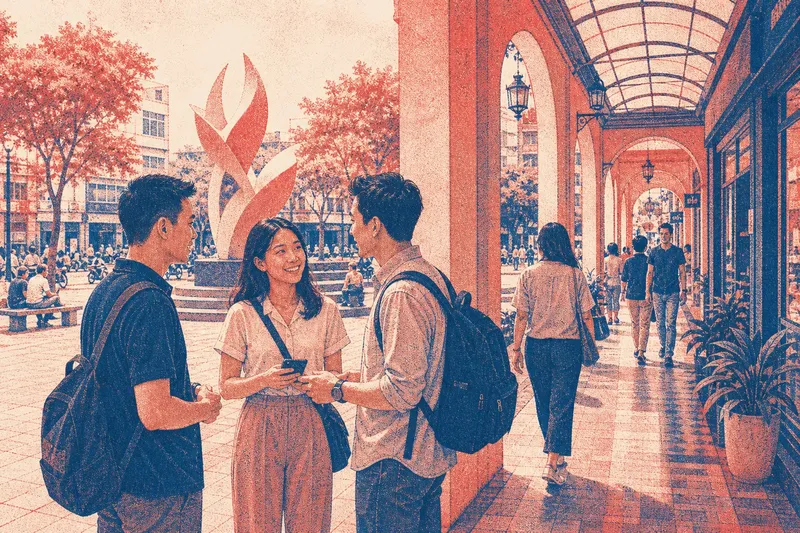
A Phú Nhuận casino meet-up works better when its public meeting point is treated as a brief waypoint, not the evening’s social center. A square or covered arcade can help people find one another, but neither turns a shared route into a place the group can claim.
The more useful distinction is how each space handles arrival and movement. A square can make it easier to spot someone approaching from different directions. An arcade can offer shelter while people regroup. In either place, the plan should account for passersby, businesses, and anyone who wants to leave for a different activity.
What does each meeting point do well?
A public square is often easier to describe by a visible feature: a sculpture, fountain, or clearly marked entrance. It can suit a quick greeting when people arrive at different times. Its open layout may also mean more noise, weather exposure, and foot traffic.
A covered arcade is more useful as a sheltered waypoint, particularly when the group needs to adjust plans before moving on. But it remains a passage used by other people. A roof does not make a narrow stretch, shop entrance, or queue a suitable place to gather.
Think of the choice as picking a doorstep rather than a living room. The spot should make arrival easy without suggesting that the group can settle in indefinitely.
How can the group keep the meeting point workable?
Use a landmark that is visible and specific, such as the entrance beside a named storefront or a public artwork. Avoid instructions like “near the center,” which can leave people searching for one another. Tell the group where to stand without occupying a doorway, crossing, queue, or main walking route.
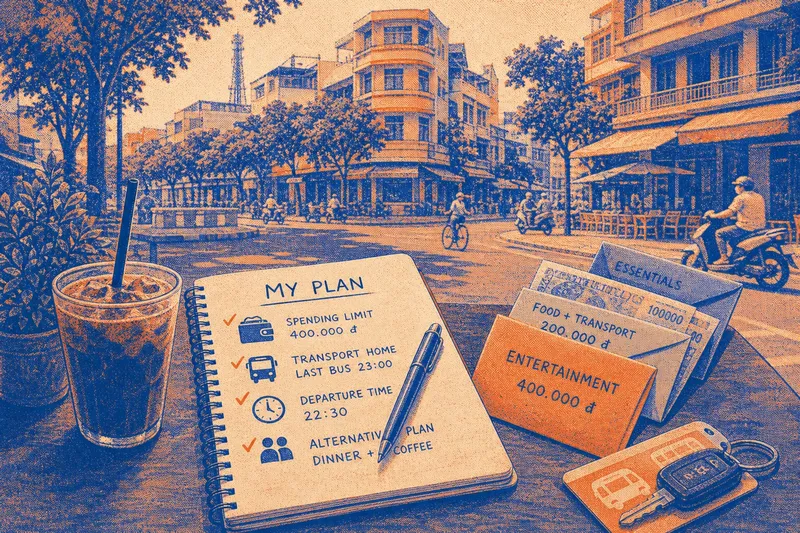
Agree on a simple arrival plan: the landmark, what to do if the area is too busy, and how to reach one another if someone is delayed. If the spot is unsuitable, move to a place intended for waiting, such as designated seating or a café where the group can be customers. Do not treat a business’s space as available without permission.
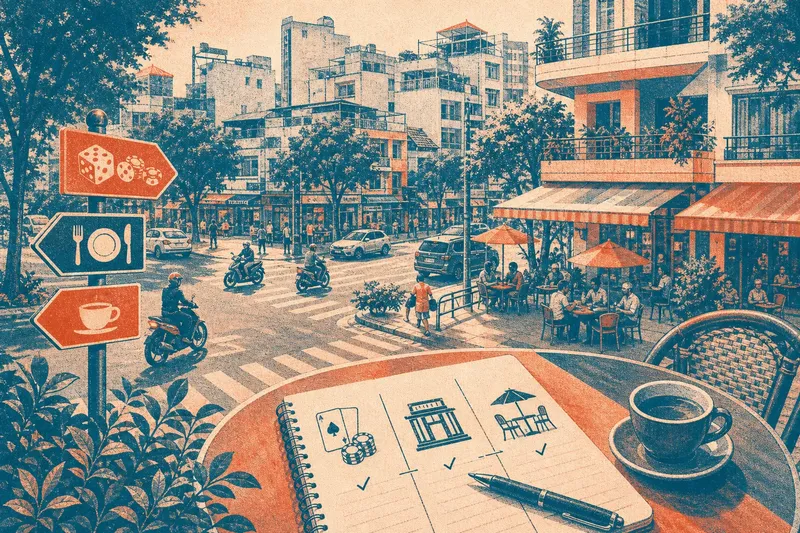
Keep the meeting point separate from the decision to visit a casino. Someone may join the gathering and choose another plan; that choice should not require a public explanation.
What should you check before staying or moving?
Use what is observable on arrival to choose between a brief pause, a move to suitable seating, or a departure. For each check, the alternative is an action the group can take without blocking shared space.
- Landmark: If everyone can identify the same feature from their approach, use it; if not, choose a clearer entrance or named storefront and send the revised location.
- Clear route: If the group can wait without blocking a doorway, crossing, queue, or walking path, pause briefly; if not, move to a designated waiting area.
- Seating: If suitable seats are open and the group can use them without displacing anyone, sit; if not, keep the spot as a rendezvous and find another place to talk.
- Conversation: If people can hear one another at an ordinary speaking volume, have a brief ordinary conversation; if not, move away from the noise or choose a quieter setting.
- Shelter: If the square is comfortable for everyone, remain there for the short greeting; if not, use an arcade only where pausing does not obstruct others, or choose an appropriate indoor venue.
- Privacy: If the conversation is ordinary and suitable for a public setting, speak quietly without assuming privacy; if it is sensitive, postpone it until an appropriate private setting.
- Different plans: If everyone freely chooses the same next activity, continue together; if not, let people depart or follow separate plans and agree on a clear, optional way to reconnect.
A map can help identify a landmark or nearby entrance, but it cannot show whether a particular place is crowded when the group arrives. Recheck the setting in person before stopping.
How might a change of plans work?
Imagine three friends arrange to meet beside a sculpture in a Phú Nhuận square before deciding whether to visit a casino. Their starting plan is to gather at that landmark, with no commitment to the next activity. When they arrive, the benches are occupied and traffic noise makes conversation difficult. They greet one another beside the sculpture without blocking the path, then walk to a café with available seating. There, each person can choose whether to continue together or leave. The observable result is a clear meeting followed by a more suitable place to talk; the tradeoff is an extra move rather than an attempt to hold a busy public spot.
What questions come up about a Phú Nhuận casino meet-up?
Can a public square work for a short wait?
Yes, if the landmark is clear and the group can stand without obstructing other people. If the pause becomes a longer conversation, move to suitable seating instead of treating the square as reserved space.
Does a covered arcade provide privacy?
No. It is still a public passage, and people may be moving through or using nearby businesses. Keep sensitive matters for an appropriate private setting.
What if someone does not want to visit a casino?
Make the next options clear and let each person decide without pressure. The meet-up can end at the landmark, or people can agree on an optional place to reconnect later.
What if someone misses the meeting point?
Send the revised landmark and a direct message rather than moving without notice. If contact fails, follow the plan agreed beforehand; do not leave someone searching through a public area indefinitely.
How can the group leave the space in good shape?
In a square, leave shared seating available to others and keep routes open. In an arcade, stay clear of shop entrances and queues, and follow posted rules. If the group needs to talk for longer, choose a setting intended for it rather than extending a brief public pause.
For a Phú Nhuận casino meet-up, the best point is the one that serves a narrow purpose well: helping people find one another and move on. A clear landmark, an unobstructed route, and an agreed way to change plans make that transition easier for the group and for everyone sharing the space.