Casino Culture in Phú Nhuận and the Choices Around a Visit
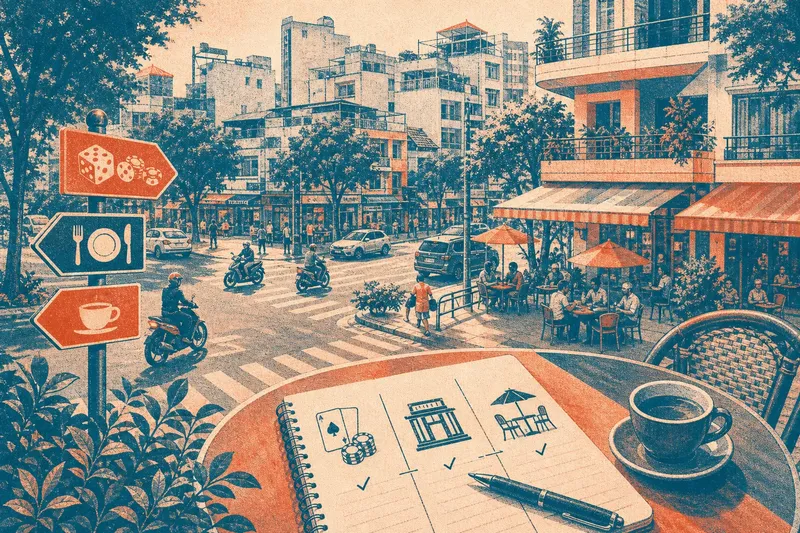
Casino culture in Phú Nhuận is shaped by the choices around a visit; use a clear spending plan, check access, and preserve room for other plans.
Casino culture in Phú Nhuận is shaped by the choices people make before, during, and after a visit. A plan for spending, transport, and time can determine whether gaming stays one option or takes over the evening.
That makes the subject less about a venue standing for a neighborhood and more about personal boundaries: what someone intends to spend, what they are willing to do, and when they will leave. These choices are useful to consider without assuming that every visitor has the same reasons or experience.
What choices shape a casino visit?
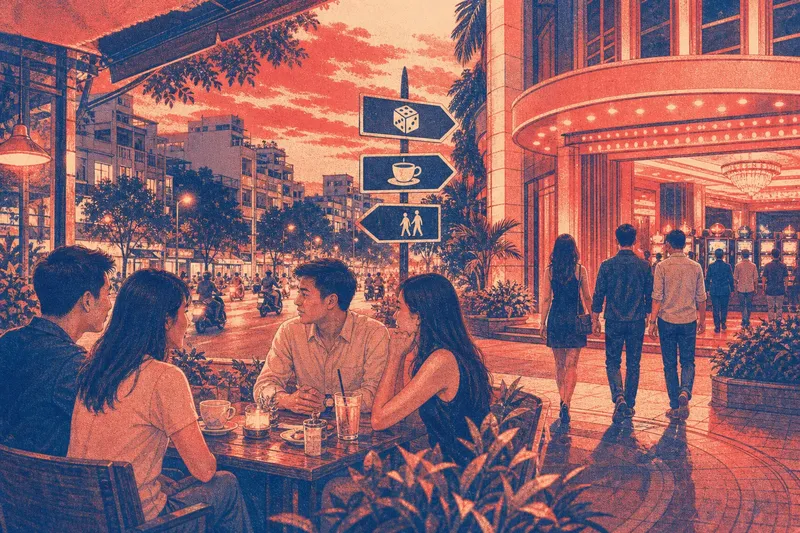
A visit involves decisions about participation, money, company, and time. Someone might arrive with friends and decide to watch rather than play; another person might choose a different activity altogether. Neither choice needs to define the rest of an evening.
It helps to separate a plan from a mood. A plan names what is available to spend and how the visitor will get home. A mood can change during the outing, so it should not be treated as a reason to abandon a limit that was set in advance.
Think of a spending limit like an envelope for a specific errand: once it is empty, the errand is over. The comparison is simple, but the boundary is useful because it makes the next decision visible.
How can a visitor set a workable boundary?
Before leaving, decide what amount is available for entertainment after ordinary expenses and the ride home are accounted for. Keep that amount separate from money needed for food, bills, or other commitments. If there is no comfortable amount to set aside, choose a no-cost plan instead.
Make the limit a ceiling rather than a target. Decide what will happen if the money is used up: stop playing, leave the gaming area, or continue the evening with a planned alternative. If a venue or activity makes it difficult to follow that decision, leaving is a reasonable option.
Time deserves its own boundary. Choose a departure cue before entering, such as the last planned transit connection or an agreed meeting time. If the evening runs later than expected, follow the transport plan rather than extending play to recover a loss or justify the visit.
What should a visitor check before deciding?
These checks connect an observable detail to a decision. Venue rules can change, so confirm access and conditions directly with the establishment rather than relying on assumptions.
- Check the posted age and identification requirements; if you meet them and have the requested identification, continue considering entry, but if not, do not enter.
- Check the current entry rules with staff or the venue’s official information; if the rules are clear and acceptable, decide whether to proceed, but if they are unclear or unsuitable, choose another activity.
- Check which areas are open to visitors; if the place you intend to visit is accessible, follow the marked route, but if access is restricted, ask staff or stay out of that area.
- Check whether you can take part without gaming; if a non-gaming option suits your plans and is permitted, choose it, but if not, pick a different destination.
- Check your planned spending against money already set aside for essentials; if the entertainment amount does not affect those commitments, keep to that limit, but if it does, skip paid play.
- Check the route home and the transport you expect to use; if the plan is clear, keep it as your departure arrangement, but if not, arrange transport before going or choose another outing.
- Check the time you intend to leave against your other commitments; if the schedule leaves room for them, proceed with that plan, but if not, shorten the visit or go elsewhere.
These are general planning points, not legal or financial advice. For questions about local rules or a personal money concern, consult a qualified professional.
How do time and company affect the plan?
Going with someone else can make an outing more social, but it can also introduce pressure to stay or spend. Agreeing on separate limits and a departure plan beforehand gives each person room to make an independent choice.
Time can also change the character of a visit. A short, planned stop is different from an open-ended evening, even if both begin at the same venue. A clear stopping point helps a visitor notice when the outing has moved beyond the plan they originally chose.
What questions help with casino choices in Phú Nhuận?
Can someone go to a casino venue without gambling?
That depends on the venue’s current access rules and the facilities it offers. Ask the establishment directly before making plans, and choose another destination if the available options do not fit.
What should a visitor do when the spending limit is reached?
Stop the paid activity rather than treating the limit as a suggestion. If the evening can continue without gaming, move to that planned option; otherwise, leave.
How can friends avoid pressuring one another to play?
Discuss separate spending limits and a departure plan before arriving. If one person wants to stop while others stay, agree on a safe way to separate and reunite or travel home.
What if the venue’s rules are unclear?
Ask staff for clarification before entering or taking part. If the answer does not resolve the uncertainty, do not proceed with the activity.
How does a worked plan change the decision?
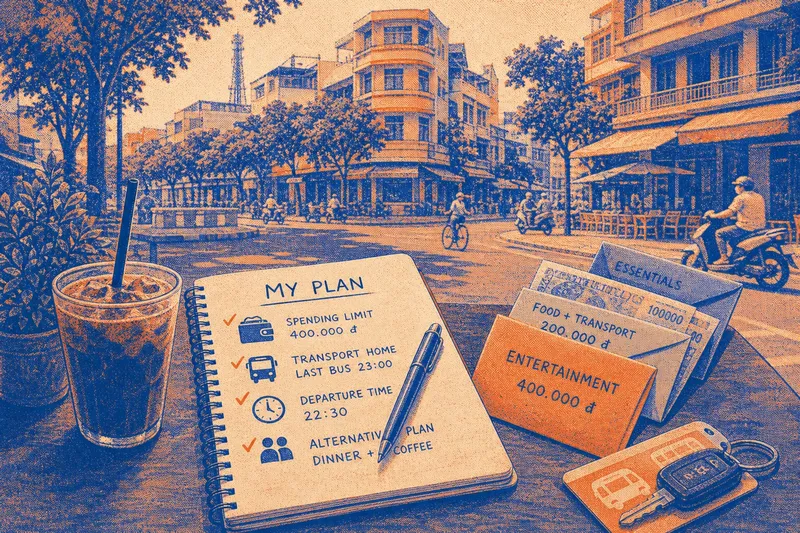
Imagine Mai has 600,000 đồng set aside for an evening out, with 200,000 đồng reserved for food and the ride home. The remaining 400,000 đồng is a fictional entertainment ceiling, not a suggested budget or a claim about typical costs.
Before leaving, Mai writes down the three amounts: 600,000 đồng available for the outing, 200,000 đồng protected for food and transport, and 400,000 đồng as the maximum for entertainment. Mai checks the venue’s current entry rules and confirms that the identification she plans to bring meets them. Mai then sets a departure cue tied to the ride home.
At the venue, Mai sees that the gaming option she is considering would use the entire 400,000 đồng entertainment amount. The decision rule is direct: if playing would exceed that amount, do not play; if it fits within the ceiling, Mai may still choose to stop or decline. Mai decides not to use the full amount on gaming, keeps the 200,000 đồng reserved for food and transport untouched, and leaves at the planned time. The observable result is a clear choice: gaming is skipped, the protected amount remains set aside, and the outing ends according to the transport plan.
This invented situation does not predict what another visitor should spend. It shows how named amounts, a specific rule, and an alternative make the decision easier to see before the pressure of the moment.
How can casino culture in Phú Nhuận be described fairly?
Describe choices without assigning motives to people who happen to be present. A visitor may be playing, accompanying someone, or simply passing through; appearance alone does not establish which. The same care applies to a venue: one business cannot stand in for everyone’s leisure choices in the district.
Casino culture in Phú Nhuận becomes more specific when an account follows the decisions that shape a visit: whether to enter, what to spend, how long to stay, and when to leave. A useful plan also names the point at which the answer changes. If a cost, rule, or transport detail no longer fits, the next choice can be to stop—not to force the evening back onto its original course.